Planning a highway trip soon? Then here’s a major update you shouldn’t ignore. The National Highways Authority of India (NHAI) is reportedly considering a complete ban on cash payments at toll plazas from April 1, 2026. If approved, commuters will have to rely entirely on digital payment methods like FASTag and UPI. As India rapidly shifts toward a digital economy, this move could transform how we pay toll charges across national highways and expressways.
Digital Toll Collection System on National Highways
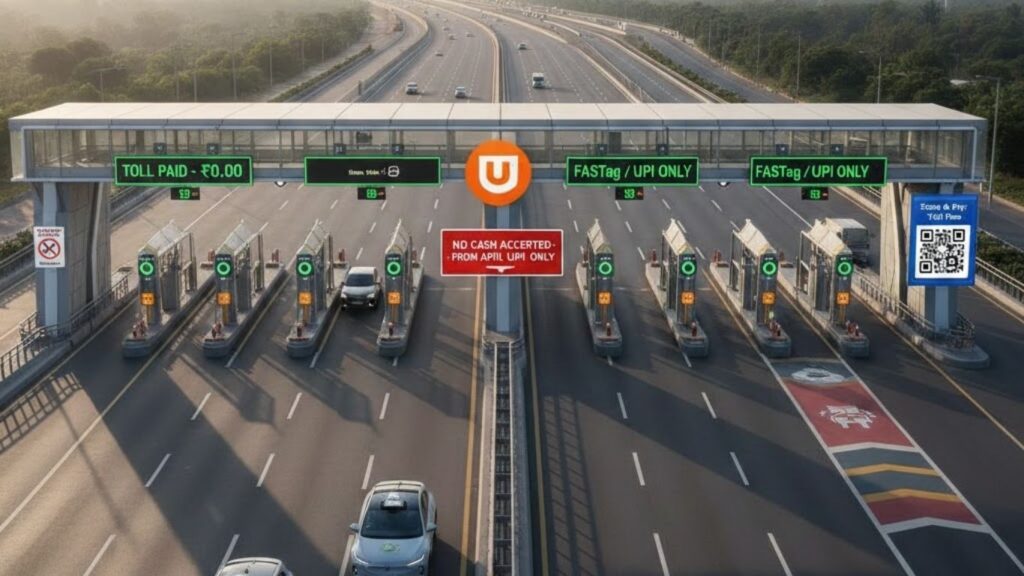
India’s highway travel may soon become fully cashless. According to reports, the National Highways Authority of India (NHAI) is evaluating a proposal to discontinue cash transactions at toll plazas nationwide starting April 1, 2026. If implemented, drivers will only be able to pay toll charges using electronic payment systems such as FASTag or UPI.
The authority aims to build a fully digital toll collection ecosystem. Therefore, once the new rule comes into effect, toll booths across national highways and expressways will process payments exclusively through electronic modes. Moreover, officials believe this transition will streamline operations and eliminate inefficiencies linked to manual cash handling.
FASTag Adoption Already Crosses 98%
Interestingly, most highway users have already adapted to digital toll payments. In fact, more than 98 percent of vehicles currently use FASTag, making it the dominant toll payment method in India. FASTag uses RFID (Radio Frequency Identification) technology, which allows vehicles to pass through toll plazas without stopping.
As a result, drivers experience faster movement and shorter waiting times. Additionally, the system automatically deducts the toll amount from the linked bank account or prepaid wallet, reducing human intervention. Consequently, the need for physical cash transactions has significantly declined over the past few years.
| Feature | Details |
|---|---|
| Proposed Implementation Date | April 1, 2026 |
| Accepted Payment Modes | FASTag, UPI |
| FASTag Usage Rate | Over 98% vehicles |
| Total Toll Plazas Affected | 1,150+ nationwide |
| Penalty Without FASTag | Double toll amount (cash payment) |
| UPI Payment Charge | 1.25x applicable toll fee |
UPI Toll Payments and Current Charges
Meanwhile, UPI payment options are already available at several toll plazas. However, under existing rules, motorists who pay via UPI are charged 1.25 times the standard toll fee. On the other hand, vehicles without a valid FASTag must pay double the toll amount if they choose to pay in cash.
Therefore, authorities clearly intend to encourage digital payments while discouraging manual transactions. Moreover, the pricing structure already nudges commuters toward electronic methods, making the transition smoother if the cash ban becomes official.
Why NHAI Wants to Eliminate Cash at Toll Plazas
Officials argue that cash transactions often create operational bottlenecks. For instance, manual payments increase congestion, extend waiting times, and sometimes lead to disputes at toll booths. Consequently, highways experience unnecessary delays, especially during peak travel hours and festive seasons.
By shifting entirely to digital toll payments, NHAI expects smoother traffic flow across more than 1,150 toll plazas on national highways and expressways. Additionally, electronic transactions improve transparency, minimize leakages, and enhance accountability in toll collection systems.
From a commuter’s perspective, the change could significantly reduce travel time. Moreover, consistent digital tracking ensures accurate billing and eliminates arguments over incorrect charges. Therefore, while some motorists may initially resist the shift, the long-term benefits appear substantial.
What Highway Users Should Do Now
If you frequently travel on highways, you should ensure your FASTag is active and properly linked to your bank account. Additionally, maintain sufficient balance to avoid penalties or disruptions at toll plazas. Meanwhile, keeping a UPI app ready as a backup option can also help during emergencies.
Although the proposal is still under consideration, commuters should prepare for a fully cashless toll system. Furthermore, as India continues expanding its expressway network, digital infrastructure will play an increasingly critical role in efficient traffic management.
In conclusion, the potential removal of cash payments at toll plazas marks another major step in India’s digital transformation journey. While the final approval is awaited, the groundwork already suggests that highway travel will soon rely entirely on FASTag and UPI. Therefore, adapting early will ensure a hassle-free travel experience in the years ahead.
FAQs
Will cash payments at toll plazas stop from April 1, 2026?
NHAI is considering a proposal to discontinue cash payments from April 1, 2026, but official confirmation is still awaited.
What payment methods will be allowed at toll plazas?
If implemented, toll payments will only be accepted through digital methods such as FASTag and UPI.
What happens if a vehicle does not have FASTag?
Under current rules, vehicles without a valid FASTag must pay double the toll amount if paying in cash.
Are there extra charges for UPI toll payments?
Yes, motorists paying through UPI are currently charged 1.25 times the applicable toll fee.
How many toll plazas could be affected by this move?
More than 1,150 toll plazas on national highways and expressways may shift to fully digital payments if the proposal is approved.