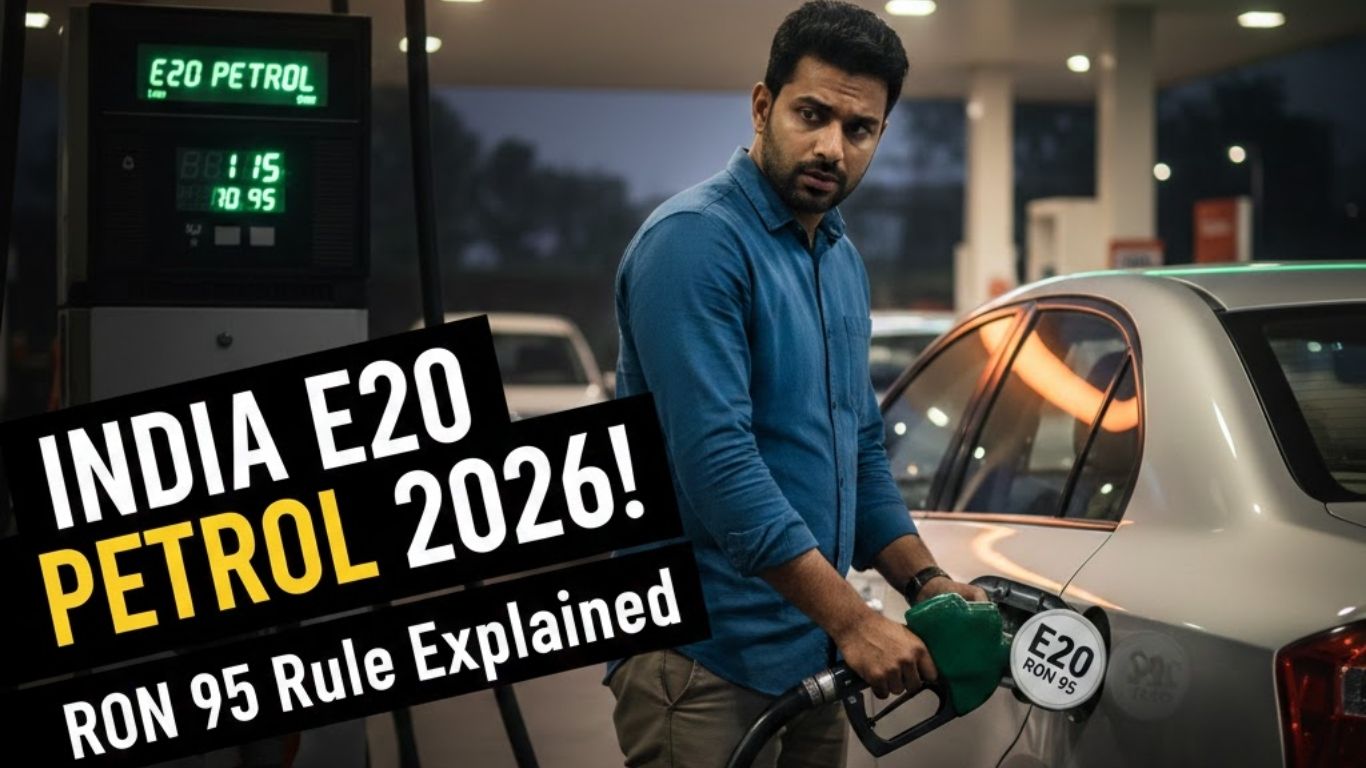
India E20 petrol mandate from April 2026 marks one of the biggest fuel transitions in recent years. From April 1, 2026, petrol pumps across the country will supply E20 petrol with a minimum RON 95 rating. While the move aims to reduce crude oil imports and cut emissions, it will also impact vehicles, fuel efficiency, and the broader economy. So, what does this change actually mean for car owners and India’s energy security? Let’s break it down clearly.
India E20 Petrol Mandate from April 2026: Key Announcement
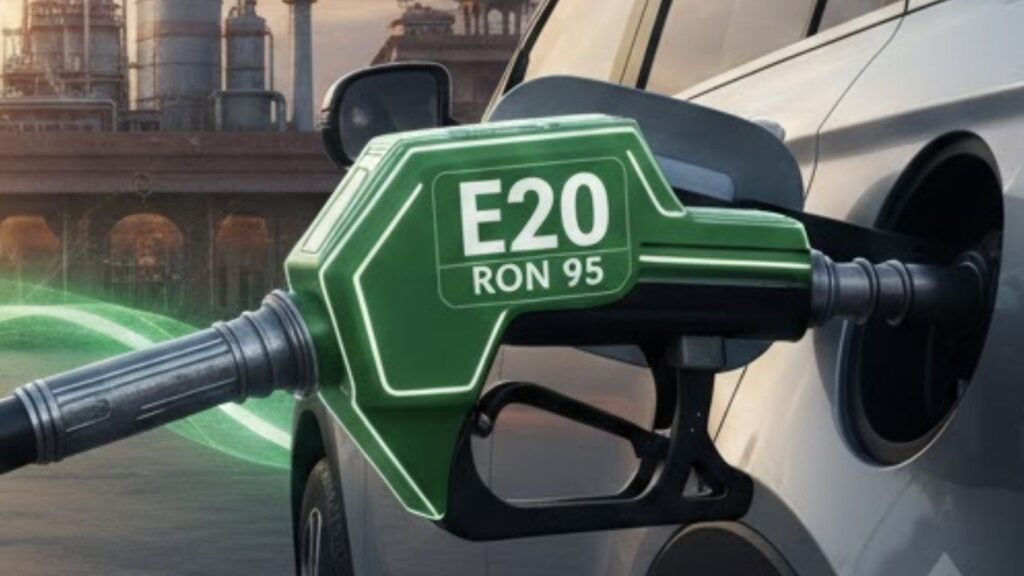
The Ministry of Petroleum and Natural Gas officially notified on February 17, 2026, that from April 1, 2026, petrol sold across all States and Union Territories must contain up to 20% ethanol. Moreover, the government has mandated a minimum Research Octane Number (RON) of 95 for this blended fuel.
Additionally, fuel suppliers must ensure that E20 petrol complies with Bureau of Indian Standards (BIS) specifications. While the rule applies nationwide, authorities may allow limited exemptions in special regional circumstances. However, for most of the country, E20 with RON 95 will become the new standard fuel.
Therefore, this mandate does not represent a pilot project anymore; instead, it marks a full-scale national rollout.
Why Ethanol Blending Matters for India
Ethanol blending plays a strategic role in India’s long-term energy roadmap. Ethanol is primarily produced from sugarcane, maize, and other grains. Consequently, it provides a renewable alternative to fossil fuels.
First, ethanol burns cleaner than conventional petrol. As a result, vehicles emit lower carbon monoxide and hydrocarbon levels. Moreover, blending ethanol reduces India’s dependence on imported crude oil, which directly strengthens energy security.
Importantly, higher ethanol demand supports farmers. Since distilleries procure sugarcane and grains for ethanol production, farmers receive a stable revenue stream. Therefore, the E20 mandate also doubles as an agricultural support mechanism.
Notably, India achieved 10% ethanol blending in June 2022 ahead of schedule. Subsequently, the government advanced the 20% blending target to 2025–26. This steady acceleration clearly reflects policy confidence and infrastructure readiness.
E20 Petrol Impact on Vehicles and Mileage
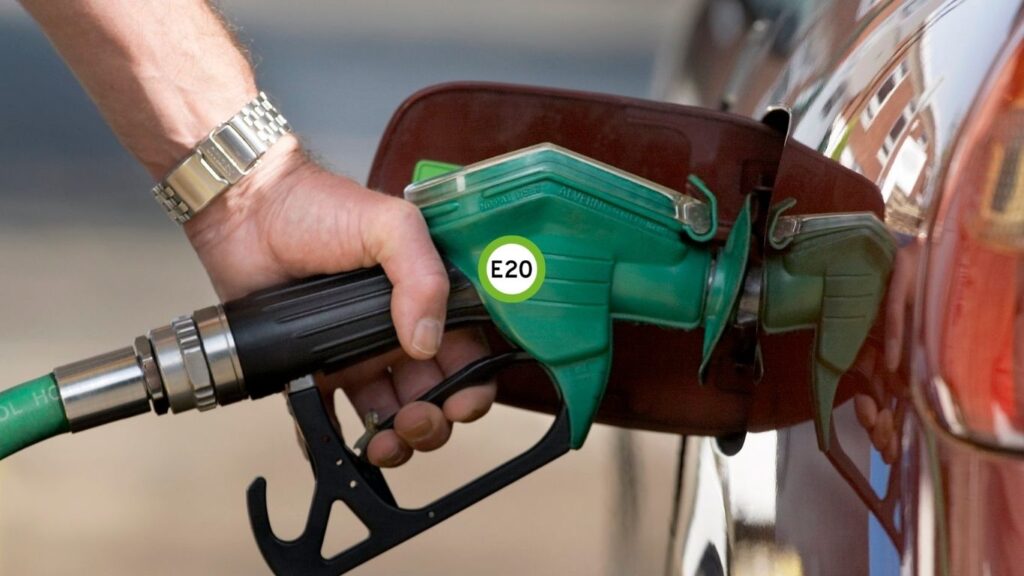
Vehicle compatibility remains the biggest concern among car owners. Fortunately, most cars manufactured between 2023 and 2025 are already E20-compatible. Automakers proactively upgraded fuel systems, seals, and engine calibrations to handle higher ethanol content.
However, some users have reported a 3–7% drop in mileage. Since ethanol contains slightly lower energy density than pure petrol, fuel efficiency may marginally decline. Nevertheless, manufacturers have optimized engine tuning to minimize this impact.
On the other hand, older vehicles—especially those built before E20 compliance guidelines—may face issues. In some cases, ethanol can accelerate wear in rubber and plastic components not designed for high ethanol blends. Therefore, owners of older vehicles should consult their manufacturer or service center.
Overall, experts expect the transition to remain smooth for the majority of vehicles on Indian roads.
What is RON 95 and Why It Matters
The Research Octane Number (RON) measures a fuel’s resistance to engine knocking. Simply put, higher octane fuels perform better under compression and protect engines from premature ignition.
Ethanol itself has a high octane rating of around 108. Consequently, blending ethanol improves the overall octane level of petrol. By mandating a minimum RON 95, the government ensures stable engine performance and reduced knocking risk.
Moreover, higher octane fuel enhances combustion efficiency. Therefore, engines can operate more smoothly, especially in modern high-compression vehicles.
| Feature | Details |
|---|---|
| Ethanol Blend | Up to 20% (E20) |
| Minimum Octane Rating | RON 95 |
| Implementation Date | April 1, 2026 |
| Regulating Ministry | Ministry of Petroleum and Natural Gas |
| Standards Compliance | Bureau of Indian Standards (BIS) |
Economic and Energy Impact of E20 Petrol
Since 2014–15, ethanol blending has reportedly saved India over ₹1.40 lakh crore in foreign exchange. Because the country imports a large share of its crude oil, even small reductions significantly impact the trade deficit.
Furthermore, reduced oil imports directly enhance India’s energy independence. Meanwhile, cleaner emissions support climate commitments and sustainable mobility goals.
In addition, the ethanol ecosystem creates rural employment in distilleries and logistics. Therefore, the E20 mandate contributes not only to environmental goals but also to economic development.
Consequently, this nationwide shift signals a decisive move toward renewable fuel integration rather than a temporary policy experiment.
FAQs
When will E20 petrol be mandatory across India?
E20 petrol with minimum RON 95 will be mandatory nationwide from April 1, 2026.
What is the minimum RON required for E20 petrol?
The government has mandated a minimum Research Octane Number (RON) of 95.
Will E20 petrol reduce mileage?
Some users report a 3–7% mileage drop due to lower energy density of ethanol, although modern engines minimize the impact.
Are older vehicles compatible with E20 petrol?
Most vehicles manufactured after 2023 are E20-compatible, while older vehicles should be checked with manufacturers for compatibility.
How does ethanol blending benefit India’s economy?
Ethanol blending reduces crude oil imports, saves foreign exchange, supports farmers, and strengthens energy security.
SEE ALSO:
- New Isuzu D-Max V-Cross 2026: Full Specs, Variants, Price & Key Changes
- Renault Strengthens Hybrid and EV Portfolio in Challenging European Market
- Nissan Gravite Variant-Wise Features Explained: Visia to Tekna Full Breakdown
- Two-Stage Car Launch Strategy Backfires in India’s Price-Sensitive Market
- Tata Sierra EV India Launch Confirmed for April–June 2026 | Platform, Battery & Segment Details
Apart from this, on AutoTrend, we will bring you every new update related to E20 petrol implementation, fuel price changes, vehicle compatibility details, and India energy policy coverage. So, stay connected with us.