India’s electric scooter boom is no longer a prediction, it’s reality. In 2025 alone, EV two-wheeler sales crossed 1.27 million units, while monthly volumes consistently stayed above 100,000. Moreover, legacy brands like TVS and Bajaj have surged ahead, reshaping the electric two-wheeler market. As trust, dealer networks, and large-scale production come into play, India’s EV revolution is entering a powerful new phase that could influence global mobility trends.
India Electric Scooter Sales Cross 1.27 Million in 2025
India’s electric two-wheeler market has officially crossed a major milestone. In 2025, retail sales cleared approximately 1.27 million electric scooters and motorcycles. Meanwhile, monthly wholesale dispatches have consistently remained above the 100,000-unit mark, signaling strong and stable demand.
Initially, many industry analysts believed government subsidies were artificially boosting numbers. However, as volumes stabilized month after month, it became clear that this growth reflects a deeper structural shift. Consumers are no longer experimenting with EVs, they are adopting them for daily commuting.
Importantly, scooters in India serve as essential transportation rather than lifestyle accessories. Therefore, once buyers gain confidence in electric mobility, repeat adoption becomes highly likely. As a result, the EV ecosystem, including charging infrastructure and battery supply chains, continues to mature rapidly.
TVS Motor Company Leads the Electric Scooter Market
While startups initially sparked excitement, legacy manufacturers have now taken command. :contentReference[oaicite:0]{index=0} currently leads the electric two-wheeler race, thanks largely to the success of its iQube electric scooter.
In 2025 alone, the TVS iQube recorded around 298,000 units in sales, giving the company nearly a quarter of India’s total EV two-wheeler market. Consequently, TVS has moved from being a traditional ICE manufacturer to a dominant EV player within just a few years.
Moreover, TVS continues to strengthen its global positioning. The company co-developed the BMW F 450 GS and revived Norton Motorcycles, demonstrating both engineering capability and international ambition. Therefore, its EV leadership aligns with broader strategic growth.
Bajaj Chetak and the Power of Brand Trust
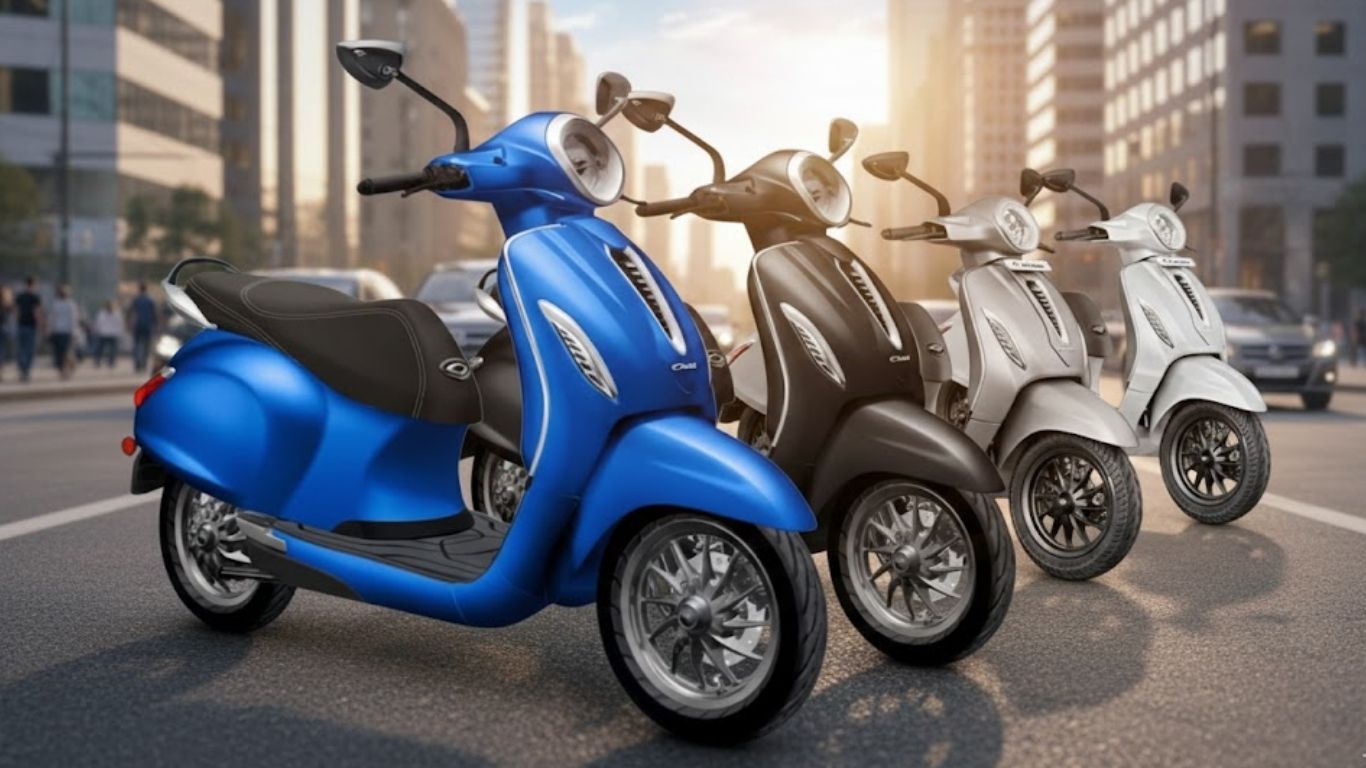
Right behind TVS stands :contentReference[oaicite:1]{index=1}, driven by the electric revival of its iconic Chetak nameplate.
In 2025, the Bajaj Chetak clocked over 260,000 units. Notably, Bajaj leveraged its extensive dealer network and decades of brand credibility. As a result, customers who hesitated to buy from startups felt more comfortable switching to electric under a familiar badge.
When daily commuting depends on reliability, trust becomes critical. Therefore, established service networks and spare part availability play a decisive role in consumer choice. In this context, Bajaj executed its strategy effectively.
Ather Energy, Hero Vida, and Ola Electric: The Competitive Landscape
Despite the dominance of legacy brands, startups remain relevant. :contentReference[oaicite:2]{index=2} crossed 150,000 units in 2025, supported strongly by the family-oriented Rizta scooter. Additionally, Ather continues to emphasize software integration and performance refinement.
Meanwhile, :contentReference[oaicite:3]{index=3} expanded its footprint through the Vida sub-brand, clearing more than 110,000 units. Consequently, Hero has emerged as one of the fastest-growing electric players in the country.
On the other hand, :contentReference[oaicite:4]{index=4}, once the undisputed headline leader, has slipped down the rankings. Although it still records meaningful volumes, its market momentum has clearly softened as competition intensified.
India’s EV Shift Is Now Structural, Not Temporary
The most important takeaway is that this growth is not a temporary subsidy-driven spike. Instead, monthly dispatches remaining above 100,000 units indicate supply-chain maturity and consistent demand.
Furthermore, India represents one of the largest two-wheeler markets globally. Unlike the US or much of Europe, Indian consumers rely on scooters for everyday mobility. Therefore, large-scale electrification in this segment reshapes manufacturing priorities worldwide.
Although China still leads in absolute electric two-wheeler volumes, India has firmly entered heavyweight territory. Consequently, global battery sourcing, platform development, and cost optimization strategies will increasingly factor in Indian demand.
2025 Electric Two-Wheeler Market Snapshot
| Brand | 2025 Sales (Approx.) |
|---|---|
| TVS Motor Company (iQube) | 298,000 units |
| Bajaj Auto (Chetak) | 260,000+ units |
| Ather Energy | 150,000+ units |
| Hero MotoCorp (Vida) | 110,000+ units |
| Total India EV 2W Sales | 1.27 million units |
Clearly, India’s electric scooter gold rush is accelerating. However, instead of startups dominating permanently, legacy manufacturers have proven their adaptability. Therefore, the transition to electric mobility now looks irreversible.
As infrastructure expands and battery costs gradually decline, growth could accelerate further. In addition, stronger competition will likely drive innovation, better pricing, and improved consumer experience. Consequently, India’s EV revolution may soon influence global two-wheeler strategies in ways few predicted just a few years ago.
FAQs
How many electric two-wheelers were sold in India in 2025?
India sold approximately 1.27 million electric two-wheelers in 2025.
Which company leads India’s electric scooter market in 2025?
TVS Motor Company leads the market, largely due to strong sales of the iQube electric scooter.
How many units did Bajaj Chetak sell in 2025?
Bajaj Auto sold over 260,000 electric Chetak scooters in 2025.
Is India’s EV growth subsidy-driven?
While subsidies helped early adoption, consistent monthly volumes above 100,000 units suggest long-term structural growth.
Why is India important for global electric two-wheeler markets?
India is one of the largest two-wheeler markets globally, so large-scale electrification significantly impacts global manufacturing, battery sourcing, and platform strategies.
SEE ALSO: TVS Jupiter 113cc Scooter Review: 48 kmpl Mileage, Price, Features & Specs 2026