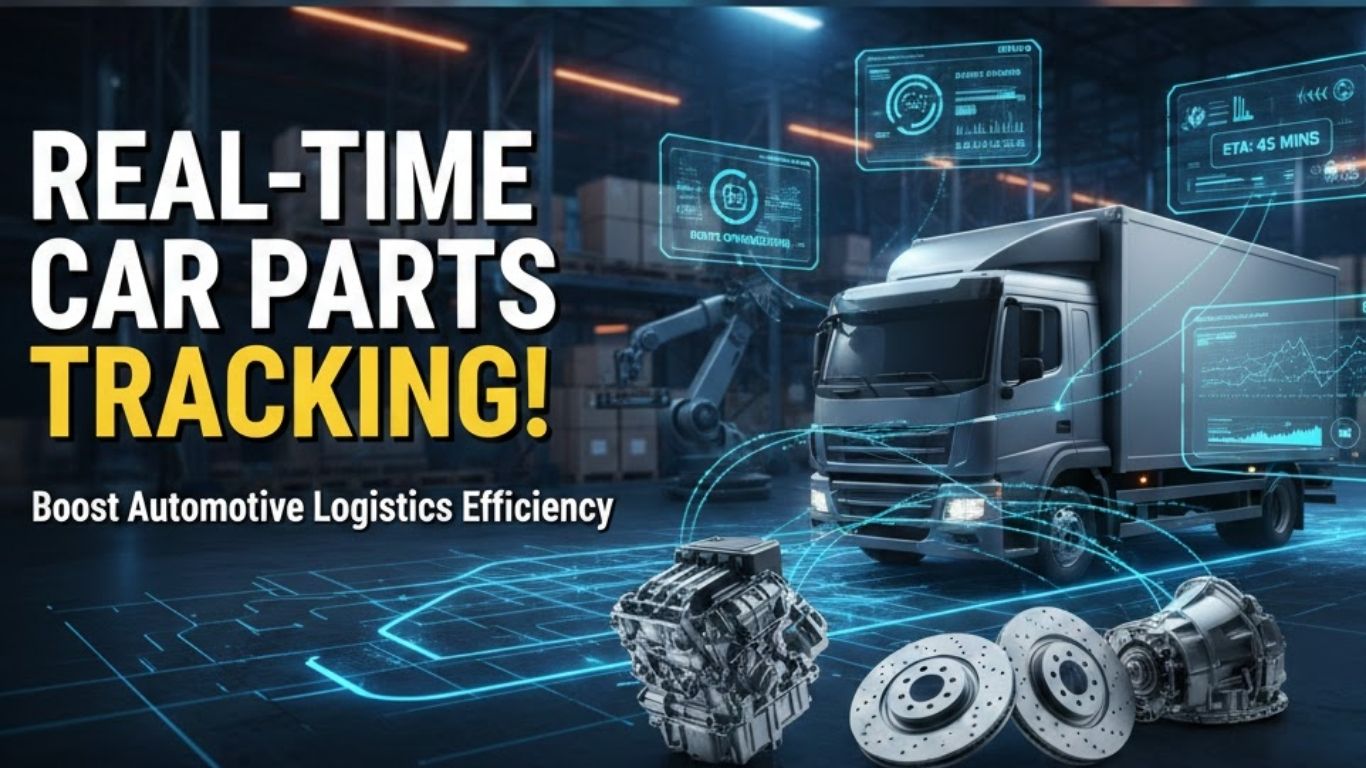
In today’s fast-moving automotive industry, car parts delivery tracking has become a game-changer for logistics efficiency. Real-time shipment visibility not only reduces delays but also improves inventory control and customer satisfaction. As dealerships, manufacturers, and repair shops rely on timely deliveries, advanced tracking systems ensure smoother operations and better coordination. Moreover, with GPS and cloud-based technologies, automotive logistics has become smarter, faster, and more transparent than ever before.
Car Parts Delivery Tracking: Why It Matters in Automotive Logistics
Car parts delivery tracking allows businesses to monitor shipments from dispatch to final delivery. Instead of relying on manual updates or phone calls, companies now use GPS-enabled systems that provide live location data and accurate estimated arrival times.
As a result, logistics managers gain complete visibility across the supply chain. Furthermore, real-time tracking helps teams respond instantly to delays caused by traffic, weather, or route disruptions. Therefore, businesses prevent downtime before it impacts operations.
In the automotive sector, timing is everything. When a critical part arrives late, service bays remain idle and customers grow frustrated. However, tracking technology eliminates guesswork and ensures predictable delivery timelines.
How Delivery Tracking Improves Operational Efficiency
Delivery tracking significantly improves automotive logistics performance. First, it enables better route planning. Since systems analyze traffic patterns and delivery density, drivers follow the most efficient paths. Consequently, companies reduce fuel consumption and transportation costs.
Additionally, repair workshops can schedule jobs based on confirmed delivery times. Instead of waiting unpredictably for parts, technicians plan workloads efficiently. As a result, vehicle turnaround time decreases and overall productivity increases.
Moreover, automated updates eliminate manual data entry errors. When a shipment leaves the warehouse, inventory systems update instantly. Similarly, once the part reaches its destination, stock levels adjust in real time. Therefore, businesses avoid overstocking or stock shortages.
Key Technologies Behind Car Parts Delivery Tracking
Modern automotive logistics relies on several advanced technologies working together:
| Feature | Purpose |
|---|---|
| Real-Time GPS Tracking | Provides live vehicle location and ETA |
| Route Optimization Software | Identifies fastest and cost-effective routes |
| Automated Notifications | Sends delivery status alerts |
| Telematics Systems | Monitors driver behavior and vehicle health |
| Cloud-Based Platforms | Enables remote access to logistics data |
Together, these technologies create a connected logistics ecosystem. For example, telematics improves driver efficiency, while cloud systems ensure that managers access data anytime, anywhere. Consequently, decision-making becomes faster and more accurate.
Benefits for Distributors, Dealerships, and Repair Shops
Car parts delivery tracking delivers measurable advantages across the automotive supply chain.
For distributors, it provides real-time visibility into multiple shipments. Therefore, they can prioritize urgent deliveries and maintain service reliability.
For dealerships and repair shops, tracking reduces downtime significantly. Since technicians know exactly when parts will arrive, they can organize workflows efficiently. As a result, customer waiting times decrease.
Meanwhile, manufacturers gain valuable performance insights. By analyzing delivery data, they optimize routes, reduce transportation waste, and improve supply chain coordination. Additionally, better tracking enhances accountability among logistics partners.
Most importantly, customers benefit from accurate delivery estimates and timely communication. Consequently, trust increases and brand reputation strengthens.
Overcoming Logistics Challenges with Smart Tracking
Although automotive logistics often involves complex multi-stop routes and urgent same-day deliveries, tracking solutions simplify these challenges. Advanced algorithms calculate optimal routes even under heavy traffic conditions.
Moreover, integrated systems connect delivery tracking with inventory management and order processing platforms. Therefore, businesses eliminate data silos and reduce miscommunication.
As operations scale, cloud-based systems adapt easily. Instead of investing heavily in manual processes, companies rely on digital infrastructure that grows with demand.
Future Trends in Automotive Parts Delivery Tracking
Looking ahead, technology will continue to transform automotive logistics. Artificial Intelligence (AI) already predicts delivery delays and suggests alternate routes proactively. Meanwhile, Internet of Things (IoT) devices enhance shipment monitoring with greater precision.
In addition, blockchain technology may soon improve transparency and security across supply chains. As competition intensifies, companies that adopt advanced tracking systems will gain a significant operational advantage.
Ultimately, car parts delivery tracking does more than monitor shipments. It improves efficiency, reduces costs, enhances customer satisfaction, and strengthens overall supply chain performance.
FAQs
What is car parts delivery tracking?
Car parts delivery tracking is a digital system that monitors automotive part shipments in real time using GPS, telematics, and cloud-based software.
How does delivery tracking improve automotive logistics efficiency?
It improves efficiency by providing real-time visibility, optimizing delivery routes, reducing delays, and automating inventory updates.
Can tracking systems reduce logistics costs?
Yes, optimized routing and improved fleet management reduce fuel usage, minimize idle time, and lower operational expenses.
Why is real-time tracking important for repair shops?
Real-time tracking allows repair shops to schedule work accurately, reduce vehicle downtime, and improve customer service.